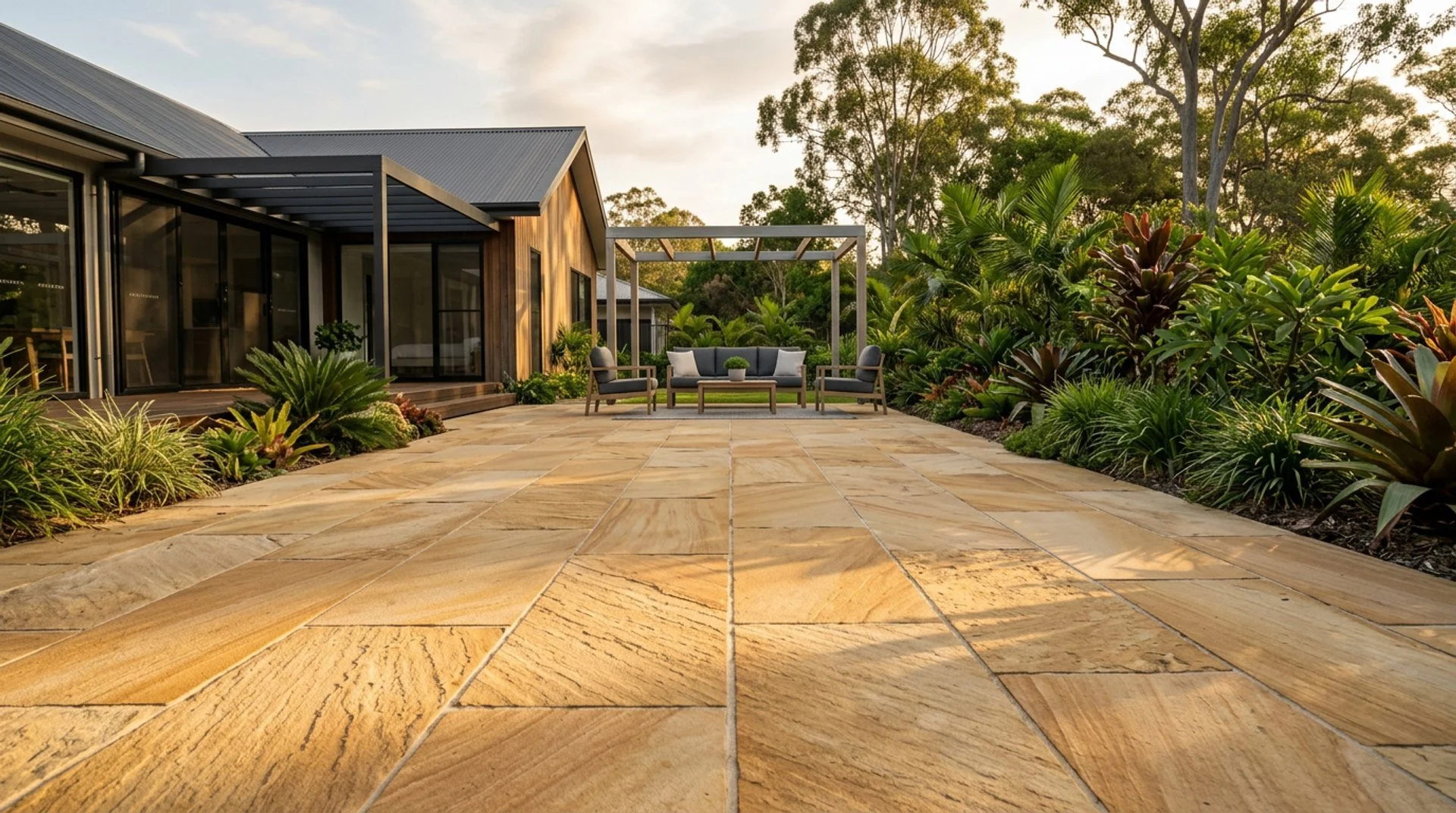
Patio Paving Specialist — Sunshine Coast
The ground every
outdoor space starts from.
A patio is more permanent than any other outdoor surface you'll lay. Stone & Grain gets the base right first — so the material on top performs the way it should for the next 30 years.
The right stone in the wrong base will fail. We've seen it. We don't build it that way.
A patio is the foundation of your outdoor living space. Unlike decking, where the structure is visible and accessible, a patio's engineering is buried entirely — which means a poor sub-base or inadequate drainage won't reveal itself as a problem until the surface above is cracking, subsiding or lifting. Rectification at that point costs significantly more than getting it right on day one.
Stone & Grain lays patios as a structural build — proper compaction, engineered edge restraints, correct setting bed for the material specified, and drainage designed before the first stone goes down.
PAVING MATERIALSFive materials. One honest breakdown.
From Queensland sandstone to large format porcelain, every paving material has a place — and a site it's wrong for. Here's what we work with regularly, what each delivers, and what each demands of the person who owns it.
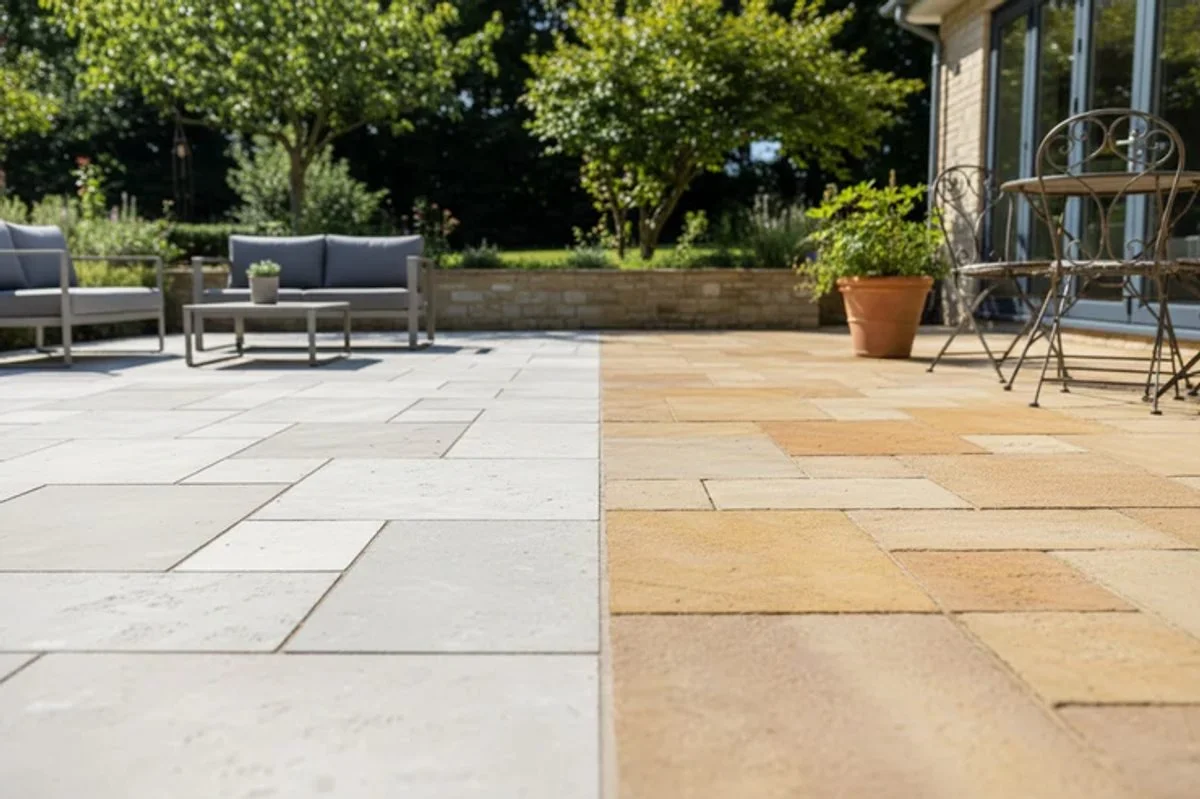
SUNNY SANDSTONE · AUTUMN BLEND · GOLDEN SANDSTONE · HONED · BRUSHED · SPLIT FACE
Sandstone Paving
Sandstone is the natural paving material of the Sunshine Coast. Its warm golden and ochre tones respond to Queensland light in a way no imported or manufactured surface replicates — and it ages into a landscape rather than against it. Stone & Grain sources and lays sandstone in honed, brushed and split face finishes depending on the application and the slip resistance required for the site.
ADVANTAGESQuintessentially Queensland — warm tones suit the region naturally
Stays significantly cooler underfoot than concrete, porcelain or granite
Ages beautifully — develops character and beds into the landscape over time
Natural slip resistance in brushed and split face finishes
Can be laid random, ashlar or coursed — highly versatile aesthetically
A genuinely natural material with long-term character and resale value
CONSIDERATIONSRequires sealing on installation and every 3–5 years thereafter
Natural colour variation between pallets — inherent to the material
Softer than granite — can chip on sharp edges in high-traffic areas
Demands a properly engineered base — laid on sand alone will fail
Premium cost per square metre over concrete or basic clay pavers
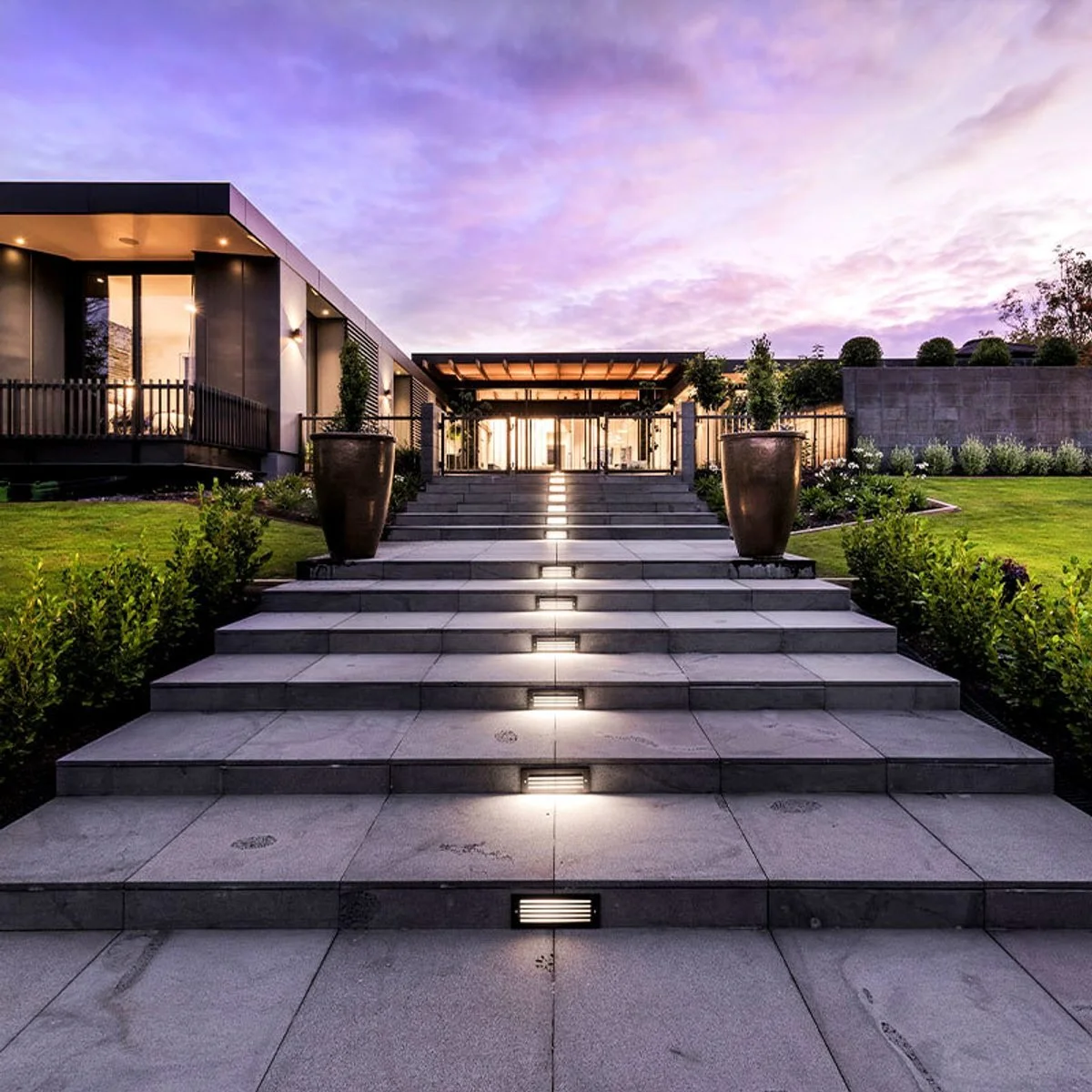
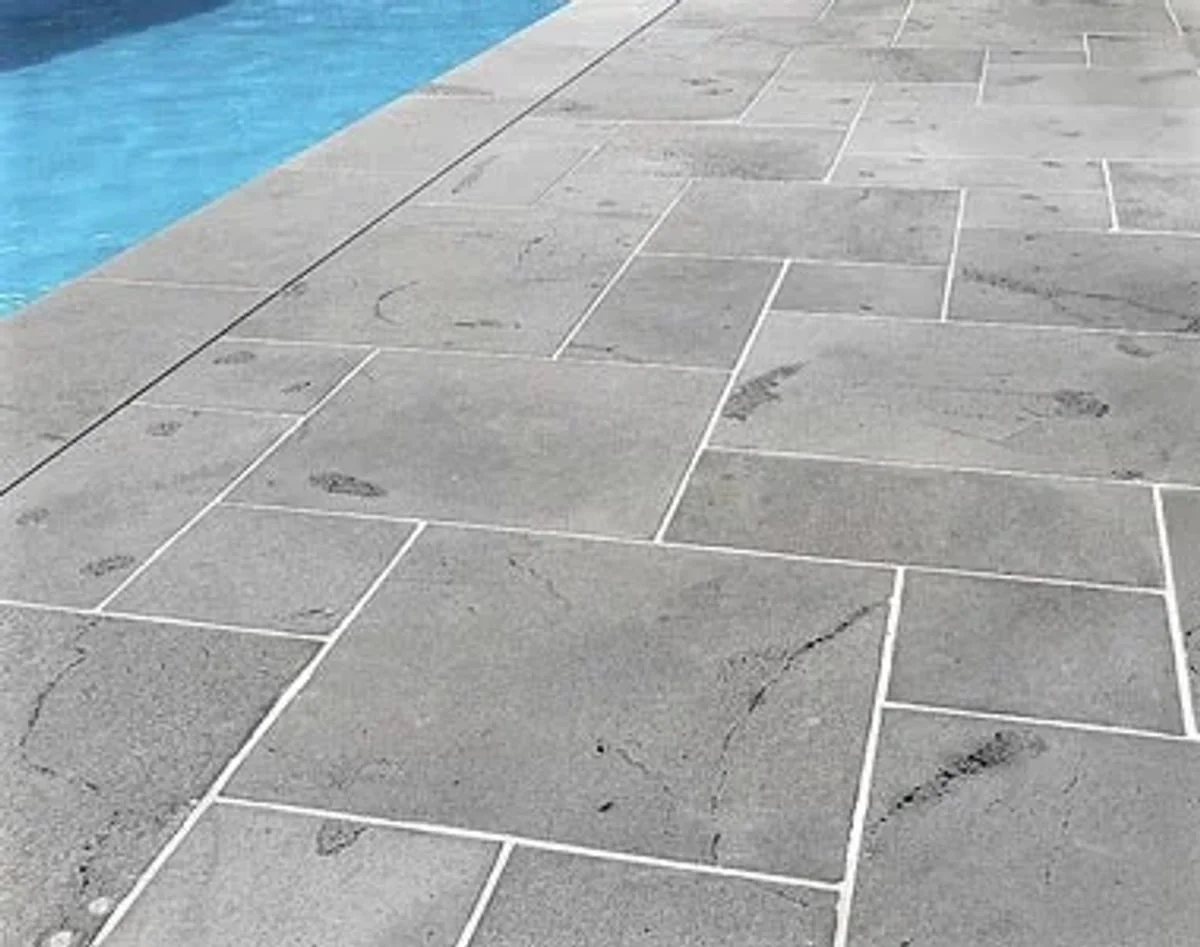
Where sandstone is warm, bluestone is cool and precise. Its blue-grey tones and dense surface suit contemporary architectural directions with a sophistication that ages as well as any natural material. Granite extends the same density and durability into a broader colour range. Both materials are among the hardest natural paving surfaces available — and both demand a builder who understands how to work with their weight and density.
VICTORIAN BLUESTONE · GRANITE · BASALT · THERMAL · FLAMED · HONED
Bluestone & Granite Paving
ADVANTAGESOne of the densest and most durable natural paving materials available
Handles heavy foot traffic and furniture without marking or wear
Excellent stain resistance when sealed — suits high-use entertaining areas
Thermal and flamed finishes provide reliable outdoor slip resistance
Suits contemporary and minimalist architectural directions cleanly
Effectively maintenance-free once sealed — generational design life
CONSIDERATIONSSignificant weight — sub-base and edge restraint requirements are exacting
Precision cutting required — density makes adjustment on site unforgiving
Higher cost than sandstone, especially for quality Victorian bluestone
Can feel cold underfoot in winter compared to sandstone or timber
Limited natural variation compared to warmer stone types
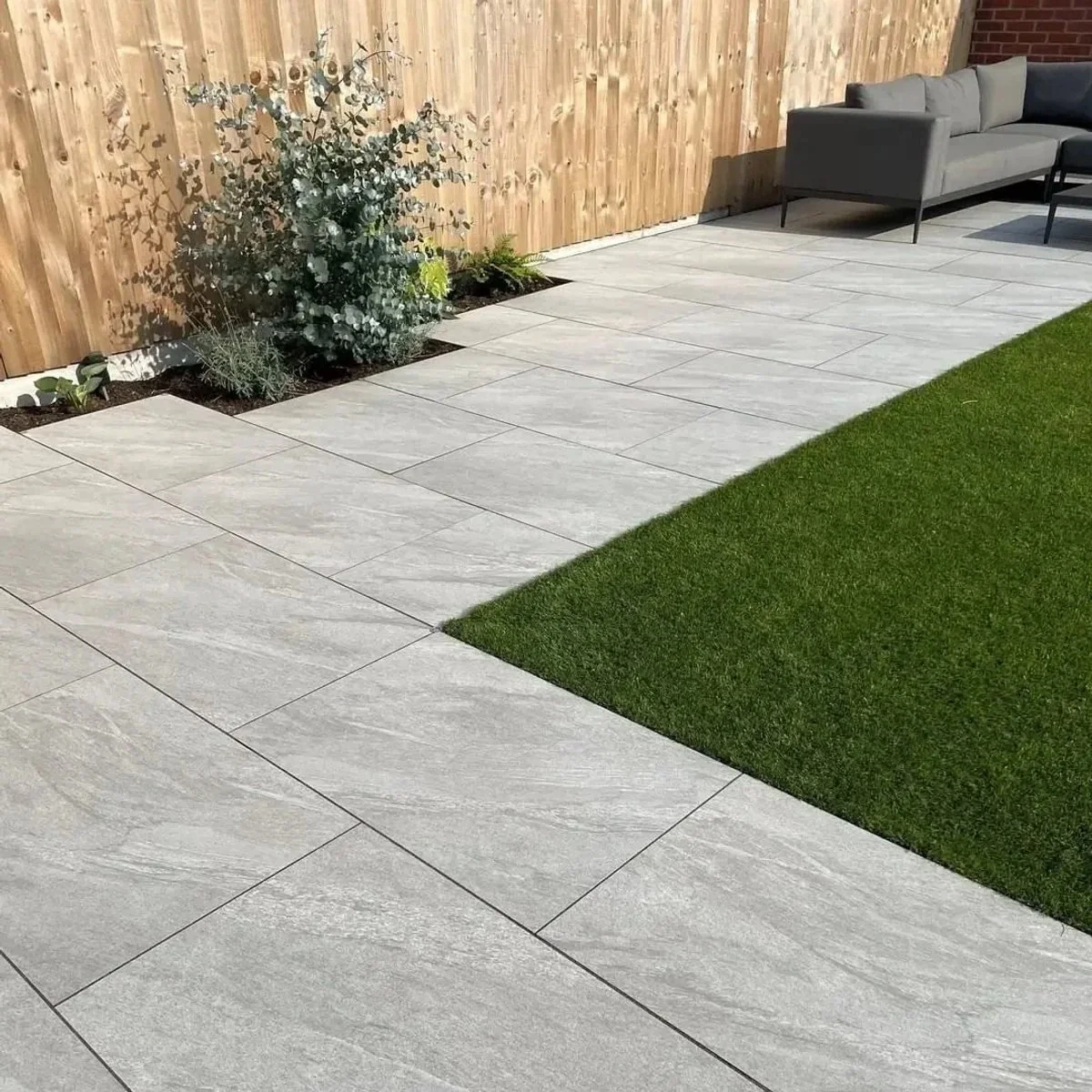
LARGE FORMAT · OUTDOOR RATED · STONE-LOOK · TIMBER-LOOK · CONCRETE-LOOK · MATT FINISH
Large Format Porcelain
Large format porcelain is the zero-maintenance choice for clients who want a seamless line between indoor and outdoor living. Matched to an internal porcelain floor through a sliding or bi-fold door, the boundary between inside and out effectively disappears. It's dense, non-porous and unaffected by pool chemicals, sunscreen or wine — nothing soaks in, and nothing needs sealing, ever. The trade-off is precision: an engineered, dead-flat base is non-negotiable, since large format sheets show ground movement that smaller pavers or natural stone simply absorb.
ADVANTAGESZero maintenance — never needs sealing, oiling or resurfacing
Cool underfoot even in direct summer sun, unlike darker natural stone
Consistent colour and pattern across every slab — nothing to manage or match
Seamless indoor-outdoor flow when matched to an internal porcelain floor
Dense and non-porous — resists staining from wine, oil and sunscreen
Stone-look and timber-look finishes without the upkeep of either material
CONSIDERATIONSRequires a precisely engineered base — large formats amplify any ground movement
Reads as a product rather than a material — less natural warmth than stone
Specify R11 outdoor slip rating as minimum — not all finishes suit outside
Damaged tiles cannot be refinished — must be replaced like-for-like
Premium large format pavers represent a significant cost per square metre
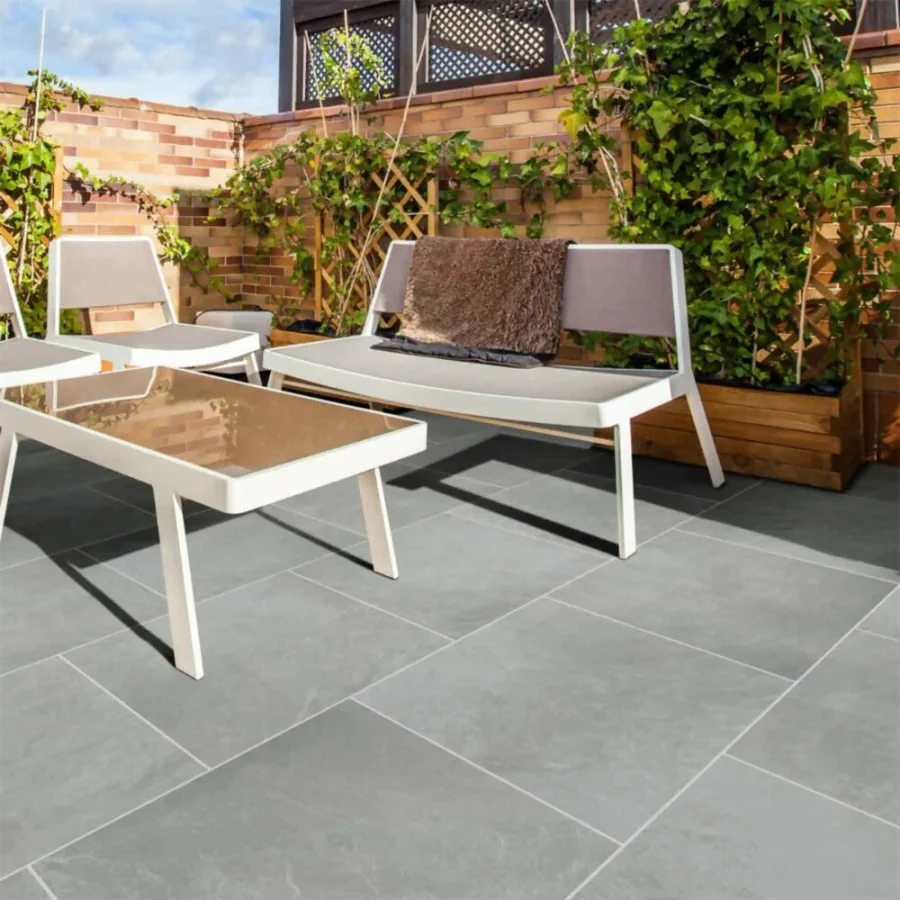
STANDARD · EXPOSED AGGREGATE · TEXTURED · BULLNOSE · CHARCOAL · GREY · CREAM · TERRACOTTA
Concrete Pavers
Concrete pavers are the practical choice — and there's no shame in that. A well-laid concrete paver patio on a properly prepared base will last decades, drain correctly, and look clean from day one. Stone & Grain doesn't shy away from concrete pavers when they're the right solution for the site and the budget. What matters is the preparation underneath and the installation quality above.
ADVANTAGESLowest cost per square metre of any hard paving option
Wide range of colours, textures and profiles readily available
Individual pavers can be lifted and relaid for drainage or service access
Consistent sizing makes installation straightforward and precise
Exposed aggregate options provide excellent slip resistance
Readily available across the Sunshine Coast — no lead time issues
CONSIDERATIONSLess character and natural variation than stone — reads as a manufactured product
Lighter colours can stain and require periodic cleaning
Retains more heat than natural stone in direct summer sun
Standard pavers fade slightly in colour over time
Joint sand can wash out over time — requires periodic reapplication
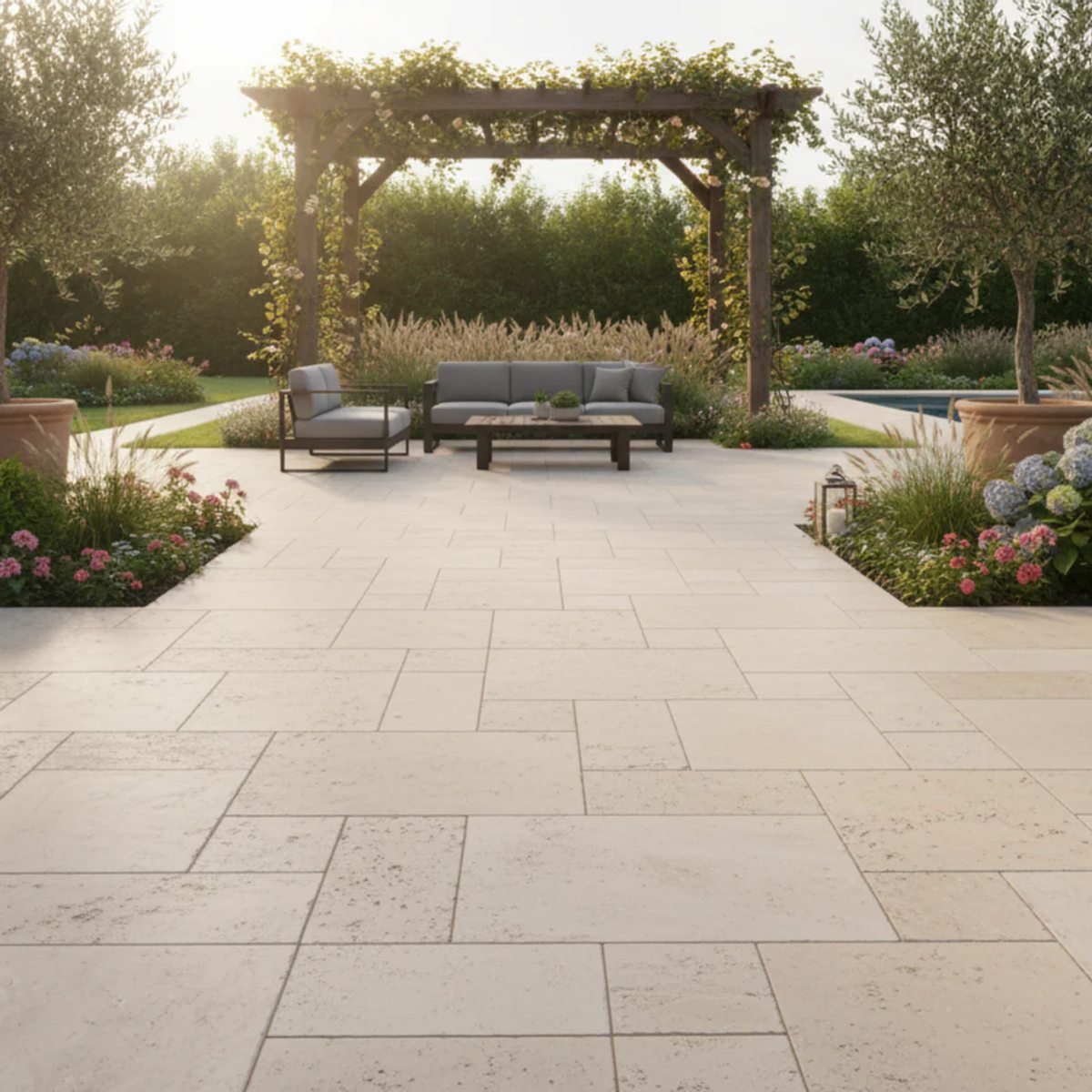
Travertine occupies the top end of the natural stone market — and for good reason. Its warm ivory tones and naturally varied surface texture give outdoor spaces a timeless quality that photographs beautifully and ages even better. It's particularly well suited to pool surrounds on the Sunshine Coast, where its ability to stay cool underfoot and its natural slip resistance in tumbled or unfilled formats make it both practical and premium.
IVORY · WALNUT · NOCE · SILVER · FILLED & HONED · TUMBLED · UNFILLED
Travertine
ADVANTAGESExceptionally warm, timeless aesthetic — ages into the landscape gracefully
Stays cool underfoot even in direct Queensland summer sun
Tumbled and unfilled formats provide excellent natural slip resistance
Highly sought-after for pool surrounds and entertainment areas
Each piece is unique — no two slabs the same
Premium appeal that adds genuine resale value to the property
CONSIDERATIONSRequires sealing on installation and regular maintenance — porous if left unsealed
Softer than granite or bluestone — not suited to heavy industrial traffic
Unfilled format can trap debris and organic matter in the natural holes
Premium cost — at the higher end of the natural stone range
Requires an experienced installer — improper bedding leads to hollow spots
What's underground determines
everything that happens above it.
BASE PREPARATION & DRAINAGEThe most common cause of patio failure isn't the stone — it's what the stone was laid on. A premium travertine or sandstone surface on a poorly compacted, inadequately drained base will crack, subside and lift. Usually within five years. Rectification means lifting every stone, recompacting and relaying — a process that costs more than the original installation.
Stone & Grain prepares every patio base to a standard that matches the material being laid above it. For large format porcelain, that means a reinforced concrete slab or a precisely levelled mortar bed. For natural stone, it means compacted road base at the correct depth, correct drainage fall, and edge restraints that prevent migration of the setting bed over time.
Drainage is designed before the first stone is laid — not solved after the fact with a grinder and a slope change. On Sunshine Coast sites where heavy summer rainfall is a given, surface water management is a structural consideration, not an afterthought.
HOW WE PREPARE EVERY BASE
01 EXCAVATION TO DEPTH
We excavate to the correct depth for the material specified — accounting for sub-base, setting bed and paver thickness — so finished surface levels integrate with the home and surrounding landscape correctly.
02 DRAINAGE FALL
Every patio is laid with a minimum 1:100 fall away from the dwelling. On challenging sites, additional drainage pits or ag-pipe systems are designed into the sub-base before any paving begins.
03 COMPACTED ROAD BASES
Correct depth of compacted road base is the difference between a patio that holds and one that moves. We compact in layers and test with a plate compactor — not a guess.
04 EDGE RESTRAINTS
Steel or concrete edge restraints prevent lateral migration of the setting bed over time — the slow-motion failure that leads to joint widening and surface movement years after installation.
05 SETTING BED SELECTION
Sand bed for concrete pavers. Mortar bed for natural stone. Adhesive on a concrete slab for porcelain. The setting bed is specified to the material — not a default that gets applied to everything regardless.
Properly prepared, properly finished — from the ground up.
Every Stone & Grain patio includes the preparation work that most quotes leave out — or leave to the client to discover missing after the fact.
WHAT'S ALWAYS INCLUDED
SEALINGAll natural stone patios are sealed on completion with an appropriate penetrating sealer for the material. Concrete pavers are jointed with polymeric sand. Porcelain is grouted and cleaned.
LEVEL TRANSITIONSWhere patios transition to doors, paths or other surfaces, we detail the level change correctly — no trip hazards, no ponding water at door thresholds.
INTEGRATION WITH LANDSCAPINGEdge transitions to lawn, garden beds and retaining walls are detailed before laying begins — not resolved with a strip of concrete at the perimeter.
CLEAN INSTALLATIONSite is cleared and cleaned on completion. Grout haze removed. Cut off-cuts and waste material removed from site. The finished patio is presented clean.
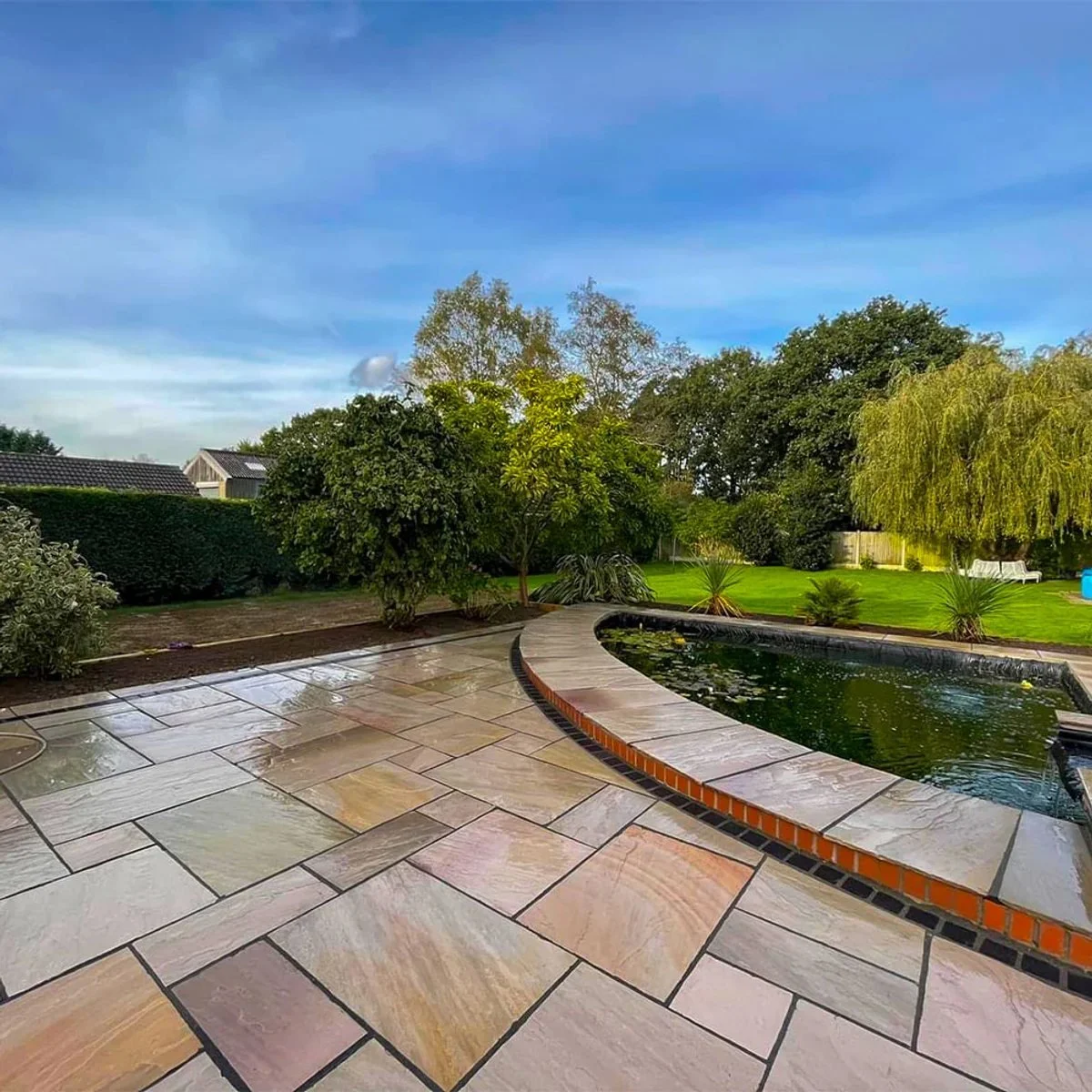
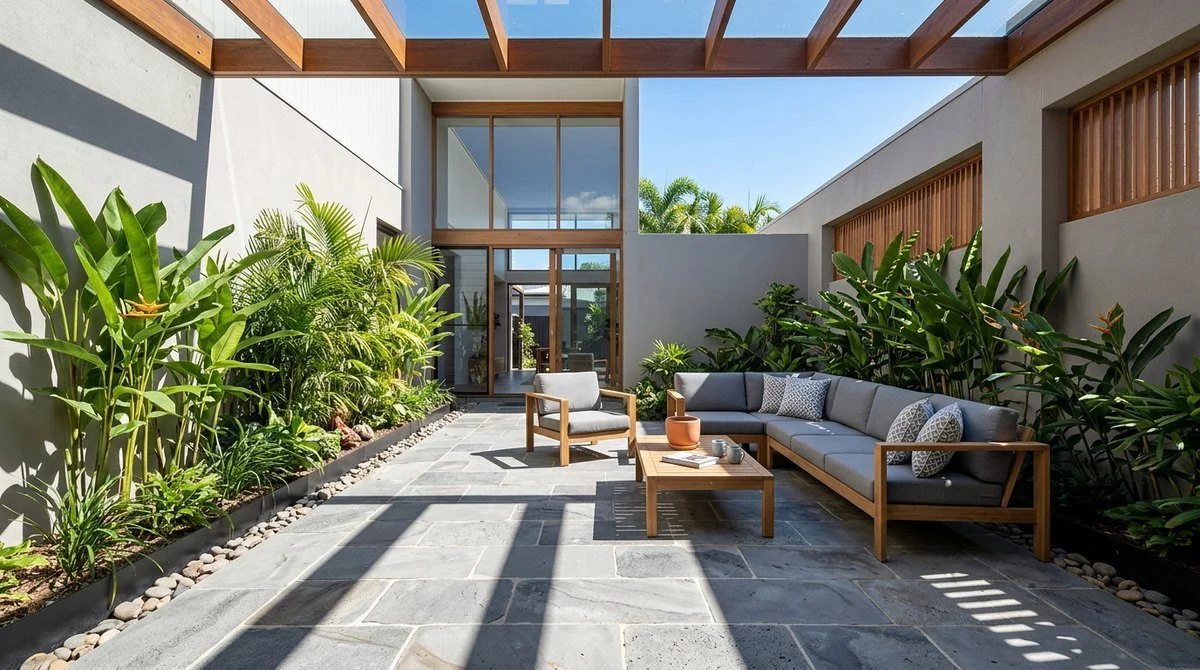
Ready to talk about your patio?
Every Stone & Grain project starts with a site visit. We look at the ground conditions, the drainage, how the space connects to the home — and work through material options that suit all three before any pricing conversation happens.
Frequently asked questions
-
Depends on budget, look and location. Sandstone is the natural Queensland choice — warm golden tones that age into the landscape rather than against it. Bluestone and granite give a denser, more contemporary look. Large format porcelain is zero-maintenance and creates a seamless indoor-outdoor flow through sliding doors. Concrete pavers are the honest mid-market option. Travertine is the premium choice, especially around pools — cool underfoot and Mediterranean in feel.
-
Because unlike a deck, a patio's engineering is buried entirely. A poor sub-base or inadequate drainage won't show up as a problem on day one — it shows up years later as cracking, subsidence or lifting, and by then rectification costs far more than doing it right the first time. We treat base prep as the actual structural build: excavation to correct depth, a minimum 1:100 drainage fall away from the dwelling, properly compacted road base tested with a plate compactor, edge restraints to stop the setting bed migrating, and a setting bed matched to the material.
-
Both last a long time when the base underneath is done properly — that's actually the bigger factor than the material itself. Concrete pavers are the more cost-effective option for larger areas and are jointed with polymeric sand for stability. Natural stone (sandstone, bluestone, travertine) is sealed on completion with a penetrating sealer suited to the material and generally ages more gracefully, developing character rather than just wearing.
-
Natural stone patios, yes — every Stone & Grain natural stone patio is sealed on completion with an appropriate penetrating sealer for that material, and resealing on a schedule keeps it performing. Concrete pavers don't need sealing the same way but are jointed with polymeric sand to lock the surface and stop weed growth between joints.
-
Every patio we lay has a minimum 1:100 fall away from the dwelling, designed into the sub-base before any paving goes down — not fixed afterwards with a grinder and a slope change. On Sunshine Coast sites with heavy summer rainfall, that's a structural decision, not a finishing touch. Challenging sites get additional drainage pits or ag-pipe systems built into the base.
-
Yes, provided it's specified correctly — outdoor and wet-area rated porcelain, not an indoor tile repurposed outside. Large format porcelain gives a seamless, consistent finish and virtually no maintenance, and works particularly well for indoor-outdoor flow through sliding doors. It needs to sit on a reinforced concrete slab or a precisely levelled mortar bed — the base tolerance for porcelain is tighter than for natural stone.
-
Sandstone is quarried locally with warm golden and ochre tones that suit the Queensland light and garden palette. Travertine is a premium imported option with cooler ivory tones, popular around pools because it stays cool underfoot and has a more Mediterranean feel. Both are natural stone and both need sealing; the decision usually comes down to the aesthetic direction of the property rather than performance.
-
Yes. Stone & Grain Co holds a QBCC Residential Low Rise Builder Licence (No. 15249701), and every patio is built as a structural job — proper compaction, engineered edge restraints, and drainage designed in from the start, not a paving-only afterthought.